

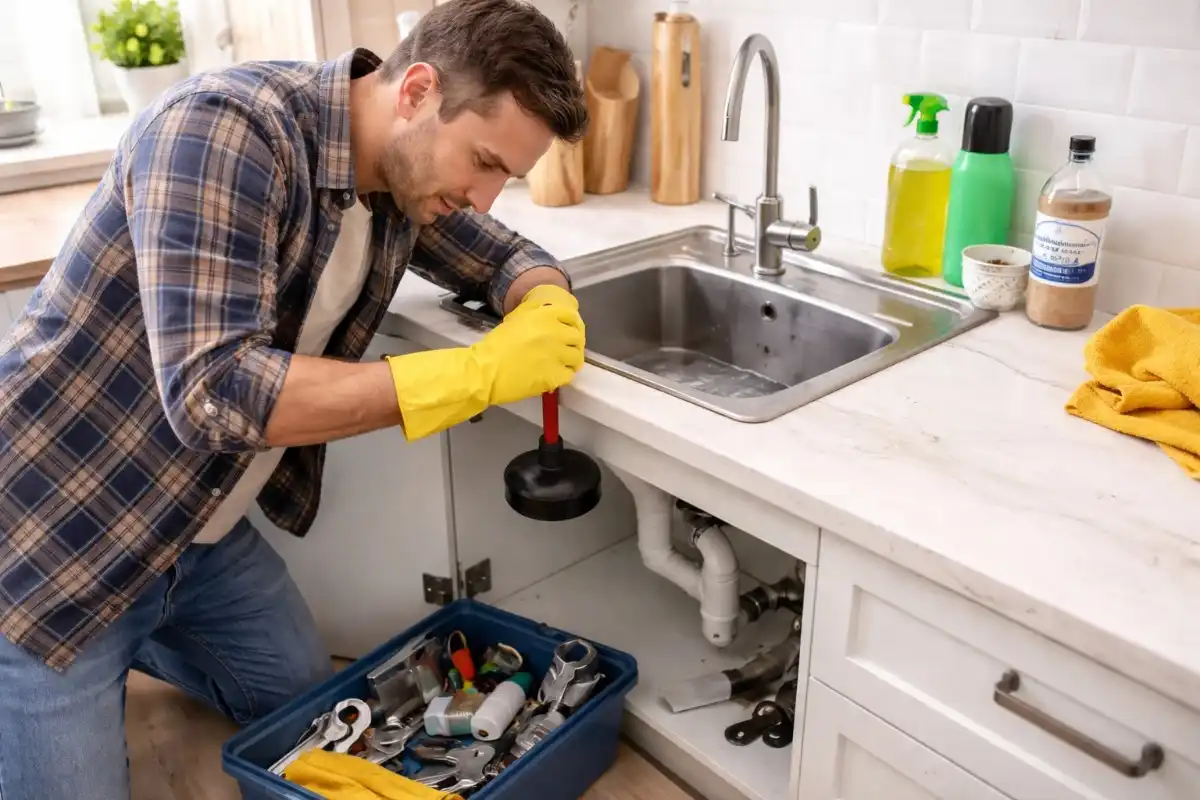
Wondering how to unblock a drain with baking soda? The method is simple: pour boiling water down the drain, follow with a cup of baking soda, then add a cup of white vinegar. Wait 15–30 minutes, then flush with more hot water. This natural approach can clear minor blockages in kitchen sinks, bathroom basins, and shower drains quickly and safely.
Why Melbourne Homes Are Prone to Blocked Drains
Melbourne’s older suburbs often feature ageing pipe systems that are particularly vulnerable to build-up. Grease from cooking, hair, soap scum, and even hard water mineral deposits all contribute to slow or blocked drains over time.
Seasonal changes don’t help either. During autumn, leaf litter can work its way into outdoor stormwater drains, while summer barbecue season tends to send more fats and oils down kitchen sinks. Understanding why blockages happen makes it easier to prevent them in the first place.
What You’ll Need Before You Start
One of the best things about this method is that you likely already have everything at home. Before you begin, gather the following:
- 1 cup of bicarbonate of soda (baking soda)
- 1 cup of white vinegar
- A kettle or pot of boiling water
- A drain cover or old cloth to seal the drain opening
- Rubber gloves for hygiene
That’s it — no harsh chemicals, no special tools. This approach is safe for most standard PVC and copper pipes found in Melbourne homes, and it won’t corrode your fixtures or harm your garden if the water drains into a garden bed nearby.
How to Unblock a Drain with Baking Soda: Step-by-Step
Follow these steps carefully for the best results. Rushing the process or skipping steps can reduce effectiveness, so take your time.
- Boil your water. Fill your kettle and bring it to a full boil. Carefully pour it directly down the blocked drain to soften and loosen any grease or soap build-up sitting in the pipe.
- Add the baking soda. Measure out one cup of bicarbonate of soda and pour it slowly down the drain. Use a funnel if needed to ensure it goes straight into the pipe rather than sitting on the drain cover.
- Pour in the vinegar. Immediately follow with one cup of white vinegar. You’ll hear fizzing — that’s the chemical reaction between the acid and the alkali working to break down organic material inside the pipe.
- Seal the drain. Place a drain cover or press an old cloth firmly over the opening. This forces the reaction downward into the blockage rather than bubbling back up and out.
- Wait 15–30 minutes. Let the mixture do its work. For stubborn blockages, you can leave it for up to an hour.
- Flush with hot water. Boil another kettle and pour it down the drain to flush away any loosened debris. Run the hot tap for a minute or two afterwards.
Repeat the process once more if the drain is still slow. Two rounds are usually enough for mild to moderate blockages caused by organic matter.
Tips to Boost the Effectiveness of Baking Soda Treatments
A few small tweaks can make a noticeable difference to how well this method works. If your shower drain is blocked, remove the drain cover first and clear away any visible hair or debris with gloved hands before you start — this gives the solution direct access to the deeper build-up.
For kitchen sink blockages, avoid pouring cooking oil or fat down the drain in future. Instead, let it cool, scrape it into a container, and dispose of it in your general waste bin. This one habit alone can dramatically reduce how often your kitchen drain blocks up.
You can also use baking soda as a regular monthly maintenance treatment, even when your drains are flowing freely. A preventative flush every four to six weeks keeps pipes clear and reduces odours — particularly useful in Melbourne’s warmer months when drain smells can become unpleasant.
What Baking Soda Won’t Fix
It’s important to be honest: the baking soda method works well on organic blockages like grease, hair, and soap scum, but it has real limitations. It won’t clear a blockage caused by a foreign object lodged in the pipe, tree root intrusion into your stormwater or sewer line, or a collapsed section of pipe.
If you’ve tried the method twice and the drain is still backing up, or if multiple drains in your home are slow at the same time, that’s a sign of a deeper issue in your drainage system. You can learn more about your plumbing and drainage options at The Plumbing & Roofing Company’s website.
It’s also worth noting that chemical drain cleaners — while tempting — can damage older pipes and are harmful to the environment. The baking soda approach is a far safer first step before reaching for anything harsher.
When to Call a Professional
Some blockages are simply beyond DIY methods, and attempting to force them can make the situation worse or cause pipe damage. If you notice foul smells coming from multiple drains, water backing up into your shower when you flush the toilet, or gurgling sounds from your pipes, it’s time to call in a licensed plumber.
These symptoms often point to a blockage or damage in the main sewer line — something that requires professional drain camera inspection and high-pressure water jetting to resolve safely and correctly. If you’re in Melbourne’s south-east, emergency plumbing in Clyde North is available 24/7, and if you’re closer to the city’s outer suburbs, emergency plumbing in Hallam offers fast, licensed response with no call-out fee.
Don’t wait until a slow drain becomes a full blockage or a sewage overflow. The Plumbing & Roofing Company provides prompt, fixed-price service across Melbourne — call them before a minor issue turns into a costly repair.
Conclusion
Knowing how to unblock a drain with baking soda is a genuinely useful skill for any Melbourne homeowner. It’s cheap, environmentally friendly, and effective for the majority of everyday blockages caused by grease, hair, and soap build-up.
Use the step-by-step method outlined above, make it part of your regular home maintenance routine, and you’ll deal with far fewer slow drains throughout the year. But when the problem goes beyond what a kettle and a box of bicarb can handle, don’t hesitate to call a licensed professional. A small plumbing issue caught early is always cheaper to fix than one left to worsen.
Frequently Asked Questions
Is baking soda safe to use on all types of pipes?
Yes, bicarbonate of soda and white vinegar are safe for most common pipe materials found in Australian homes, including PVC, copper, and stainless steel. Unlike harsh chemical drain cleaners, this method won’t corrode your pipes or damage seals and fittings when used as directed.
How long should I leave baking soda in the drain before flushing?
For best results, leave the baking soda and vinegar mixture to work for at least 15 to 30 minutes before flushing with boiling water. For more stubborn blockages, you can safely leave it for up to an hour before flushing.
Can I use baking soda to unblock an outdoor stormwater drain?
Baking soda is most effective on organic blockages inside your home’s internal drains. Outdoor stormwater drains blocked by leaf litter, soil, or debris are better cleared by removing the grate and physically clearing the material. Persistent stormwater blockages may require a licensed plumber with jetting equipment.
How often should I use baking soda as a preventative drain treatment?
A monthly maintenance flush using baking soda and white vinegar is a great habit for Melbourne homeowners. It helps prevent build-up before it becomes a blockage, reduces drain odours, and keeps your pipes flowing freely — particularly in kitchen and bathroom drains that see heavy daily use.


