

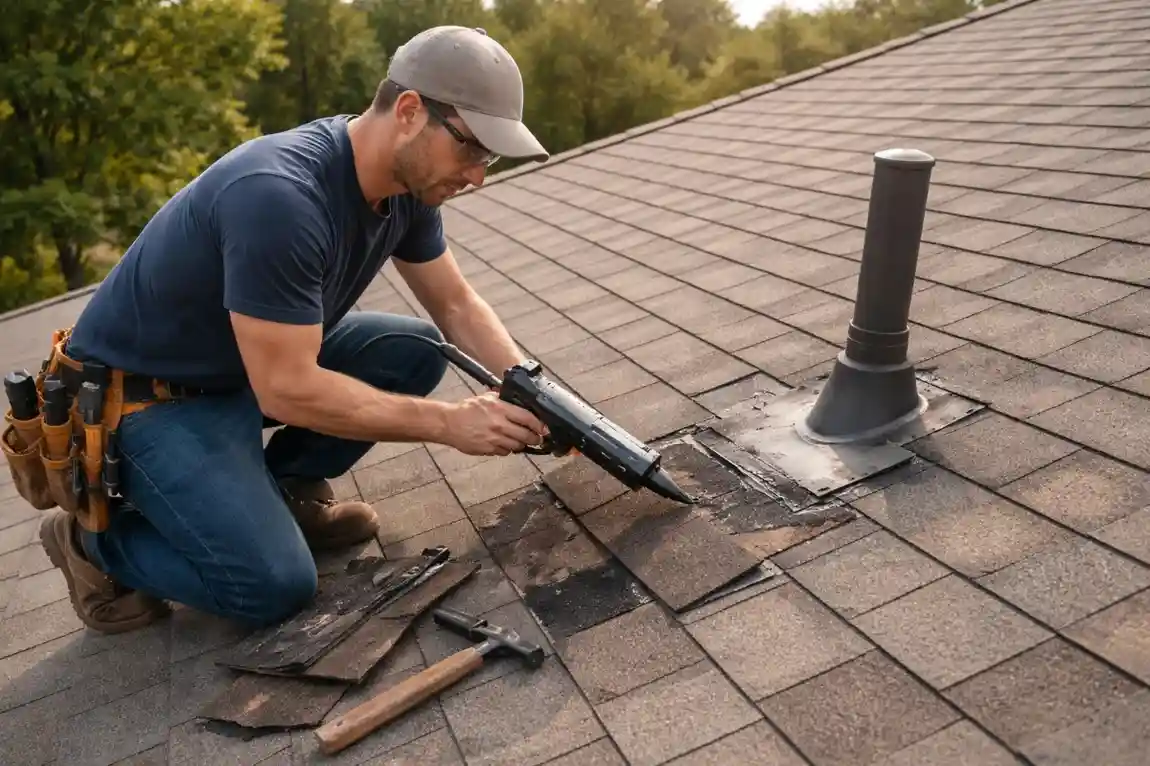
A small brown stain on the ceiling usually looks undramatic. No alarms. No flashing lights. All that’s left is a quiet mark that spreads like terrible news. In Australian homes, especially after wild summer storms or winter downpours, that tiny patch often signals a bigger issue brewing above the plasterboard.
That is the problem with roof leak repair. The visible drip is often the final clue, not the first one. Water can travel along timber, insulation, wiring paths, and plasterboard before it finally shows its face. By the time the stain appears, the leak may already be doing laps inside the roof cavity like it owns the place.
In Australian homes, the problem gets even trickier. Harsh sun, coastal salt, sudden storms, blocked gutters, and failing drainage services can all turn a minor issue into major structural damage. A cracked tile in Melbourne, a rusted metal sheet in Sydney, or a lifted flashing edge after wild wind in regional Victoria can all lead to the same messy ending.
Early roof leak repair matters because the cost gap is huge. A simple patch job, flashing fix, or replacement tile is one thing. Rotten timber, mold removal, ceiling replacement, insulation damage, and electrical risk are on an entirely unique invoice. Nobody enjoys meeting that invoice.
Early warning signs that most homeowners often overlook
The earliest indicator of a roof leak rarely appears on the roof itself. It usually shows up indoors—faint watermarks near cornices, bubbling paint on ceilings, or a subtle damp smell in the hallway after rain. These clues often appear weeks before active dripping starts. Ignoring them is one of the most common mistakes property owners make before arranging roof repairs for leaks.
Another pattern shows up in roof cavities during inspections. Insulation batts develop darker patches where moisture has soaked through. Timber rafters may feel damp even if the ceiling below still looks fine. During roof leak repairs, these hidden signs often reveal the leak source earlier than visible damage does.
Homeowners sometimes dismiss these signs because the leak seems intermittent. It might only appear during intense rain or strong wind from a certain direction. That behavior often points to flashing problems rather than broken tiles. Waiting until the leak becomes constant usually means more internal damage has already occurred.
Why does roof leak repair get delayed until it worsens
There is a predictable hesitation around roof work. Access feels difficult, and many people assume repairs require large scaffolding or full roof replacement. In reality, a large percentage of roof leak repairs involve relatively small fixes, such as resealing flashing joints, replacing a cracked tile, or tightening loose roofing screws.
Cost perception also plays a role. Homeowners imagine a massive repair bill and decide to wait another season. Ironically, that delay tends to increase costs dramatically. What started as a minor sealant failure might allow water to rot battens or corrode metal fixings over time.
roof leak repair
Another reason roof leak repair gets postponed is the absence of obvious damage during dry weather. The leak appears only during storms, so it feels less urgent once the weather clears. Yet inside the roof cavity, moisture lingers longer than expected. Insulation and timber hold water, quietly worsening the situation between rain events.
Roof leak repair techniques used by experienced roofers
Professionals usually investigate the roof before patching. The first step usually involves tracing water movement across the roof surface and inside the roof cavity. Water rarely travels in straight lines. It often runs along rafters or insulation before appearing inside the house.
Experienced roofers also test surrounding areas rather than fixing only the obvious damage. For example, a cracked tile might sit next to deteriorating ridge capping mortar. Repairing just one section may stop the immediate drip but leave another weak point that fails during the next storm.
Another practical technique involves controlled water testing. A small hose spray replicates rainfall while someone observes the roof cavity. This process reveals the precise entry point. It may sound simple, but it prevents guesswork, which is one of the main reasons poorly done roof leak repair sometimes fails within months.
Roof leak repair mistakes that cause bigger damage
Some of the most expensive repair bills start with a cheap shortcut.
Common mistakes include:
- using too much sealant as a universal fix
- patching the visible spot but not the source
- walking on fragile tiles incorrectly
- ignoring flashing defects
- delaying repairs after the first leak
- assuming all watermarks are plumbing-related
- assuming all leaks are roofing-related
- forgetting to inspect gutters and drainage paths
A leak is never impressed by optimism. It responds only to a proper diagnosis and repair.
Common roof materials and how leaks develop over time
Different roofing materials develop leaks in different ways. Tile roofs often fail because individual tiles crack under thermal expansion or foot traffic during previous repairs. Metal roofs usually leak at fasteners where rubber washers deteriorate after years of sun exposure.
Colorbond roofing has strong corrosion resistance, yet sealant joints around penetrations eventually dry and split. Skylights, vents, and chimneys introduce additional flashing points where water can slip through. Many roof leak repairs involve these transition areas rather than the roofing sheets themselves.
Flat or low-slope roofs introduce another challenge. Water drains slowly, allowing minor membrane damage to expand over time. By the time internal stains appear, moisture may have spread across a large section of insulation. That’s why roof leak repair on flat roofs often includes broader waterproofing rather than simple patching.
How storm damage turns minor issues into leaks
Storms have a way of uncovering flaws that might have stayed hidden for years. Heavy winds can catch roof sheets just enough to loosen screws or nudge flashing edges out of place. It only takes a tiny shift to let the rain in, which is why roof leak repair requests always surge right after a big blow.
Hail brings its own set of problems. It can dent metal surfaces or leave hairline cracks in tiles upon impact. You might not see a leak right away, but these small fractures slowly let moisture seep through. When a homeowner discovers a stain on the ceiling months later, they often mistake it for a new leak.
Debris is a factor people often miss. A fallen branch can knock a tile loose or bend a metal sheet just enough to ruin the waterproofing. When carrying out roof leak repairs, our guys often find branches or leaves stuck in valleys that have been forcing water into places it shouldn’t go.
Roof cavity inspections reveal hidden moisture paths
Just looking at the outside of the roof doesn’t always tell the full story. A proper roof cavity inspection shows exactly where water traveled once it got inside. You’ll often see dark stains on the timber rafters that map out the leak’s path long before it ever hits your ceiling.
Insulation also provides a narrative. Wet insulation compresses and loses its thermal performance. During roof leak repairs, sections of insulation sometimes weigh significantly more due to absorbed moisture. Replacing those materials becomes part of the repair process.
We also keep an eye on electrical wiring during those cavity checks. Water can actually travel along cables and end up dripping straight into light fittings. These risky situations are exactly why you need to jump on repairing roof leaks the moment you see any dampness inside.
Quick prevention table
|
Maintenance Task |
Suggested Timing |
Why It Matters |
|
Gutter cleaning |
Every 3–6 months | Prevents overflow under roof edges |
| Roof visual check | Twice a year |
Finds small damage early |
|
Flashing inspection |
After storms | Stops hidden entry points |
| Valley clearing | Seasonal |
Keeps water moving correctly |
|
Interior ceiling check |
Monthly | Spots early moisture signs |
| Drainage review | As needed |
Supports wider drainage services planning |
Cost trade-offs between patching and full repairs
Some homeowners request quick patch jobs to save money, which occasionally works for minor issues, but calling a professional plumber in Cranbourne is often necessary when the problem involves a single cracked tile or minor flashing gap. However, patching multiple weak spots repeatedly can cost more than a comprehensive repair.
Roof leak repair professionals often face this dilemma. A homeowner may approve only the minimum fix, yet surrounding materials show signs of wear. When another leak appears months later, the perception becomes that the original repair failed, even though the underlying issue was broader roof aging.
Replacing sections of flashing or resealing entire valleys sometimes feels excessive initially. Yet in practice, it prevents repeat service calls and interior damage. Roof leak repair decisions often involve balancing immediate cost against long-term reliability.
Preventive maintenance that reduces leak risk greatly
Routine maintenance plays a surprisingly large role in preventing roof leak repair emergencies. Gutters filled with leaves allow water to back up under roofing sheets. Cleaning them regularly prevents overflow that might otherwise enter the roof cavity.
Checking your roof after a major storm can significantly improve its condition. Catching a shifted tile or a loose sheet early means you can fix it before the next downpour finds the gap. Too many people skip this step, thinking their roof is “set and forget” once it’s installed.
A smart preventive move is to reseal the areas around vents and skylights every few years. Sealants break down so slowly that you won’t notice until the water is already coming in. Keeping up with inspections and resealing is way cheaper than dealing with a massive roof leak repair job down the road.
Real situations where leaks caused expensive damage
A common scenario occurs in older suburban homes with tile roofs where damaged gutters and downpipes or a single cracked tile allow rainwater to drip onto insulation. Over months, that moisture spreads across the ceiling plasterboard. By the time stains appear, replacing insulation and ceiling sections becomes necessary alongside roof leak repair.
Metal roofs sometimes present another costly case. Loose fasteners allow water to seep beneath sheets during wind-driven rain. Over time, the battens underneath begin to rot. What started as a few loose screws evolved into structural timber replacement.
Occasionally, leaks travel surprisingly far from the entry point. During one roof leak repair investigation, water entering near a chimney ran along rafters nearly three meters before dripping into a living room ceiling. Without tracing that path carefully, the repair might have targeted the wrong area entirely.
Conclusion
You should never put off roof leak repair. A tiny drip can turn into a disaster fast, especially with the Australian climate’s mix of intense heat and sudden storms. If you notice stains, a musty smell, rust, or cracked tiles, you need to act quickly to avoid expensive damage inside your home.
The smartest way to handle it is to inspect early and find the root cause rather than just patching over the symptoms. Staying on top of your gutters and flashing helps a lot.
If you notice leaks in your property, contact us today for a professional quote and safeguard your home before a minor problem escalates into a major one.
Frequently Asked Questions
1. What is the first step in roof leak repair?
The first step in roof leak repair is locating the source safely. Internal signs, like stains, damp insulation, and mold, can help trace the leak before any external repair begins. Fast action matters because even a small leak can spread through ceilings, timber, and walls if left untreated.
2. How long can a roof leak be left before major damage starts?
A roof leak should not be left for long. Water damage can begin quickly, especially during repeated rain. Ceiling stains, insulation damage, wood rot, and mold can all develop faster than expected. Early roof leak repair usually costs less and helps avoid bigger structural problems later.
3. Can blocked gutters cause issues with roof leak repairs?
It’s true that clogged gutters are a huge reason people end up needing roof leak repair. When they overflow, the water has nowhere to go but back under the roof tiles and into your house. Regular cleaning and proper drainage help your roof stand up to heavy Australian rain much better.
4. Is roof leak repair ever linked to plumbing problems?
Sometimes yes. When plumbing is involved, one may confuse a leak near ceilings or walls with roofing damage. A local emergency plumber or emergency plumbing services team may be needed if the issue is connected to internal pipes, overflow points, or a kitchen sink clogged problem nearby.
5. When should a professional handle a roof leak repair?
Professional roof leak repair is the better option when the roof is steep, the leak keeps coming back, the source is hard to find, or the damage involves flashing, mold, or electrical risk. Fast help can limit repair costs and improve safety, especially after storms or heavy rain.


