

There’s a particular kind of dread that hits when you spot a faint brown stain creeping across the ceiling below your bathroom. It usually shows up on a Sunday arvo, right when you’ve finally sat down with a coffee. I’ve walked into that scene more times than I’d like to admit, and the culprit is almost always the same: a bath that was installed in a rush, with a few corners cut along the way.
Here’s the good news. Bathtub installation Melbourne homeowners can trust isn’t about luck or a massive budget. It’s about getting a handful of unglamorous details right: the waterproofing, the drainage, the fall, the fittings and the licence of the person holding the wrench. Get those right and your bath will quietly do its job for twenty years. Get them wrong and you’ll be calling a plumber with a bucket in your hand.
This guide walks you through everything bathtub installation Melbourne projects involve, from choosing a style to understanding costs, so your next bathroom project feels more like a smart investment and less like a gamble.
Why Bathtub Installation Melbourne Homes Need Is Different
Melbourne is a city of contrasts, and your bathroom reflects that. One week you’ve got a 38-degree scorcher, the next you’re digging out the puffer jacket. That swing matters more than you’d think. Houses sitting on reactive clay soil, which covers a huge chunk of Melbourne’s suburbs, expand and contract with the seasons, and that slow movement can stress pipes, joints and waterproof membranes over time.
Then there’s the housing stock. A Federation home in Hawthorn, a 1960s brick veneer in Moonee Ponds and a new apartment in Southbank all have completely different plumbing and floor structures. A bath that slides neatly into one can be a nightmare in another. Older homes often hide galvanised or copper pipework that doesn’t love being disturbed, while apartments come with strata rules, noise limits and concrete slabs that change how waste lines are routed.
So when someone asks me whether bathtub installation Melbourne projects are “just swapping a tub”, I laugh a little. It’s closer to performing surgery on a house that has its own personality. A good installer reads the property first and the brochure second.
Quick answer: Bathtub installation in Melbourne is the process of fitting a new bath, connecting its taps, waste and overflow to your plumbing, and sealing the surrounding area so water can’t escape. It needs a licensed plumber and, in most cases, proper waterproofing.
Bathtub Replacement Melbourne vs a Brand-New Bath: What’s the Real Job?
Before you fall in love with a tub on Instagram, work out which job you’re actually doing. Bathtub replacement Melbourne households usually need is a like-for-like swap, where the old bath comes out and a new one of the same size and position goes in. The existing pipework stays largely where it is, which keeps the cost and the mess down.
A brand-new bathtub installation Melbourne projects involve is a different beast. Maybe you’re moving the bath to a new wall, converting a shower-bath combo, or adding a tub where there wasn’t one. That means new waste lines, new water supply and possibly floor alterations. It’s more work, and it’s the point where a bathroom renovation Melbourne style stops being a weekend job and becomes a proper project with a plan.
In short: a replacement is simpler and cheaper, a relocation is more complex and costlier, and knowing which one you’re doing keeps your quote honest.
Built-In vs Freestanding: Choosing Your Style Without Regret
This is the fun part, and also where people tend to get carried away. Both styles can look incredible. Both can also leak if they’re installed badly. What changes is how they sit in the room and how the plumbing works.
Built-In Bathtub Installation
Built-in bathtub installation means the bath sits inside a frame or hob, usually tiled around the edges. It’s the classic Aussie look, it makes smart use of space and it suits smaller bathrooms and family homes. The catch is that the join between the bath and the wall is your biggest leak risk. That sealed edge needs the right waterproofing and flexible sealant, because baths flex slightly when filled and people climb in and out of them every day.
Freestanding Bathtub Installation
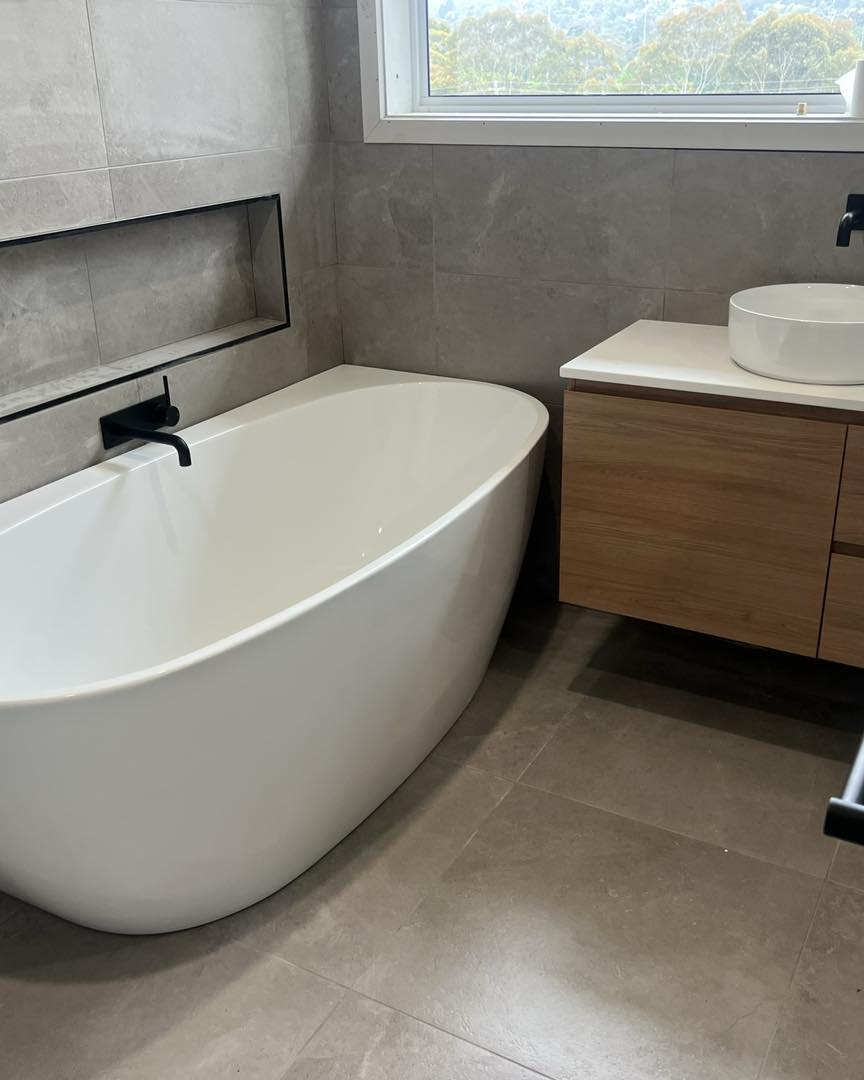
Freestanding bathtub installation gives you that boutique-hotel moment. The bath stands on its own, with taps either floor-mounted, wall-mounted or attached to the tub itself. It looks stunning, but it asks more of your plumber. The waste often exits through the floor, so the slab or subfloor needs planning, and heavy cast iron or stone resin baths demand a floor that can handle the load. A full tub with a person in it can weigh well over 300 kilograms, so structural checks aren’t optional.
| Feature | Built-In Bath | Freestanding Bath |
| Look and feel | Classic, streamlined | Statement piece |
| Best for | Small to medium bathrooms | Larger, open bathrooms |
| Main leak risk | Wall and tile edges | Floor waste and tap connections |
| Installation complexity | Moderate | Moderate to high |
| Typical upkeep | Regular sealant checks | Check floor waste and taps |
My honest take? If you’ve got the space and the budget, freestanding wins on wow factor. If you’re short on room or want something practical for busy mornings, built-in is hard to beat. Either way, the best bathtub installation Melbourne can deliver comes down to the plumber, not the brand.
Bathtub Leak Prevention: Where Problems Actually Start
Most leaks aren’t dramatic. There’s no burst pipe or geyser. They’re slow, sneaky seepages that run for months behind a wall before anyone notices. That’s why bathtub leak prevention is really about getting the boring stuff right at the beginning.
From my experience, a few culprits cause the bulk of callouts. Here’s what I check first on every job:
- Poor waterproofing: Wet areas need a proper membrane applied and cured before tiling, and the bath edge is a critical zone.
- Weak waste and overflow connections: A loose or badly sealed joint under the bath drips every time it drains.
- Cheap or old sealant: Silicone that’s cracked, mouldy or the wrong type lets water sneak behind the tiles.
- Unsupported baths: If the tub isn’t level and fully supported, it flexes, and flexing breaks seals.
- Overtightened fittings: Cranking a connection too hard can crack plastic or squash a washer, creating a slow weep.
Prevention continues after bathtub installation Melbourne jobs finish, too. Every six months or so, run a finger along the sealant and check for gaps or discolouration. If you spot movement or soft tiles near the bath, deal with it early. Moisture is patient, and it always wins eventually.
Bathtub Plumbing Melbourne: Drainage, Overflow and Water Flow
If waterproofing is the raincoat, drainage is the engine. Bathtub plumbing Melbourne installers deal with involves three main parts: the hot and cold supply to the taps, the waste that carries water away and the overflow that stops the tub spilling if you forget it’s running. (We’ve all done it. No judgement.)
Bathtub drainage installation is where I see the most corner-cutting in bathtub installation Melbourne jobs. A bath waste needs a steady fall toward the main drain so water leaves quickly instead of pooling and sitting in the pipe. Too flat and you get slow drainage and smelly traps. Too steep and you can cause noisy flow and siphoning. Pipes are typically 40 millimetres for a bath waste, and the connection to the trap and stack has to be airtight so sewer gas stays where it belongs.
This is also where broader bathroom plumbing services Melbourne households rely on can help. A plumber who looks at the whole system, including the shower, vanity, toilet and hot water unit, will spot issues that a tub-only tradie might miss. Fixing everything in one visit is cheaper than coming back three times.
Licensing, Permits and the Rules You Can’t Skip
This part isn’t glamorous, but it protects your wallet and your insurance, and any legitimate bathtub installation Melbourne job should follow it. In Victoria, plumbing work must be carried out by a licensed or registered plumber, and the plumber is required to provide a Certificate of Compliance for most regulated work. That certificate is your proof the job meets the plumbing standards. If you ever sell the house or make an insurance claim, it matters.
The Victorian Building Authority regulates plumbers across the state and explains what work needs a licence and what paperwork follows. You can read their official guidance on plumbing work and compliance requirements in Victoria before you hire anyone. It’s worth a look, especially if a mate-of-a-mate offers to do the job “for cash and no worries”.
Waterproofing is also governed by Australian Standards for wet areas, and some larger bathroom renovation Melbourne jobs, particularly ones involving structural changes, may need a building permit. Your plumber or builder should tell you upfront which approvals apply. If they brush the question off, that’s your cue to keep shopping.
The short version: hire licensed, ask for the Certificate of Compliance and keep the paperwork somewhere safe. It’s boring, but it’s the cheapest insurance you’ll ever buy.
Bathtub Replacement Cost Melbourne: What You’ll Likely Pay
Let’s talk money, because nobody enjoys vague quotes. Bathtub replacement cost Melbourne homeowners face depends on the bath you choose, how easy the access is and what’s hiding behind the old tub. The figures below are rough ranges to help you plan, not fixed prices, so always get a written quote for your specific site.
| Job type | Typical range (AUD) | What drives the price |
| Basic bath swap (acrylic, like-for-like) | $2,500 to $5,000 | Bath cost, removal, re-sealing |
| Built-in bath with retiling | $4,500 to $8,000 | Tiling, waterproofing, framing |
| Freestanding bath installation | $4,000 to $9,000+ | Bath type, floor waste, taps |
| Relocating a bath | $6,000 to $12,000+ | New plumbing, floor and wall work |
Several factors push the number up or down. Cast iron baths are heavy and need extra hands. Stone resin and premium brands cost more before a plumber even arrives. Second-storey bathrooms and apartments can add access challenges. And if the old floor has rotted around a leaking tub, you’ll be paying for carpentry as well.
Here’s a piece of advice I give everyone: don’t chase the cheapest quote. A rock-bottom price often means skipped waterproofing or a plumber who won’t be answering the phone when something goes wrong. The cheapest bathtub installation Melbourne can offer rarely stays the cheapest once you add the repair bill. Compare what’s included, not just the total.
How to Choose the Right Plumber for Bathtub Installation Melbourne
Picking who installs your bath matters more than picking the bath. A great tub in the hands of a rushed installer will fail, and a modest tub installed well will outlive your next three phones.
Start with the basics: confirm the plumber’s licence number on the Victorian Building Authority register and check they carry proper insurance. Ask whether they handle waterproofing themselves or subcontract it, and who’s responsible if something leaks later. Ask to see photos of similar jobs. A confident tradie will happily show you.
I’d also look for a company with real local experience. A team that handles bathtub installation Melbourne wide, across older inner-city homes, outer-suburb new builds and apartments, has seen the quirks of each. That experience means fewer surprises, and fewer surprises mean fewer costs. At The Plumbing And Roofing Company, we’ve built our reputation on exactly that: doing it properly the first time, explaining the work clearly and standing behind it.
Bathtub Installation Melbourne Timeline: What to Expect on the Day
Knowing the flow takes the stress out of the day. A typical bathtub installation Melbourne job runs across one to three days, depending on the complexity.
The old bath comes out first, and the plumber inspects the pipes, floor and wall behind it. Any damage gets fixed at this stage, not hidden. Next comes the new waste, overflow and supply connections, followed by a test run with water while everything is still visible. Only after that passes does the waterproofing go on, and it needs proper cure time before tiling or sealing. Finally the bath is set level, tiled or finished, sealed and given a last full test.
If anyone suggests skipping the cure time to “finish faster”, politely say no. Rushing waterproofing is like rushing a cake out of the oven: it looks fine until you cut into it.
Conclusion
A good bath should feel like the best part of your day, not a source of stress. To recap: the right bathtub installation Melbourne project starts with understanding your home, choosing between built-in and freestanding styles, and getting the waterproofing, bathtub drainage installation and plumbing connections right. Prevention beats repair every time, licensed plumbers and a Certificate of Compliance protect you legally, and realistic budgeting, with typical bathtub replacement cost Melbourne ranges in mind, keeps surprises away. Spend a little more attention at the start and you’ll spend far less on repairs later.
If you’re ready to plan your bathtub installation Melbourne project, or you’re worried about a leak that’s already making itself known, get in touch with The Plumbing And Roofing Company today. Our licensed team will inspect your bathroom, explain your options in plain English and give you a clear, honest quote with no nasty surprises. Call us or send an enquiry now, and let’s get your bathroom sorted properly the first time.
Frequently Asked Questions
How long does bathtub installation Melbourne homes typically need?
A straightforward bathtub installation Melbourne swap usually takes one to two days, including removal, plumbing connections and sealing. If tiling, waterproofing or floor repairs are involved, expect three to five days, since waterproof membranes need time to cure properly before tiles go on. Your plumber should give you a realistic schedule after inspecting the bathroom.
Do I need a licensed plumber for bathtub installation in Melbourne?
Yes. Bathtub installation Melbourne wide falls under Victorian plumbing rules, so work such as connecting a bath’s taps, waste and overflow must be done by a licensed or registered plumber, who should issue a Certificate of Compliance for the work. Using an unlicensed person can void insurance cover and cause problems when you sell, so it’s never worth the risk.
What causes a bath to leak after installation?
The usual causes are poor waterproofing, loose waste or overflow connections, worn or incorrect sealant and a bath that isn’t properly levelled and supported. Slow leaks behind tiles are the most common, which is why a reputable bathtub installation Melbourne plumber always water tests before closing up the wall, a key step in bathtub leak prevention.
Is a freestanding bath harder to install than a built-in one?
Generally, yes. Freestanding bathtub installation needs careful planning for floor waste positions, tap placement and floor strength, especially for heavy materials like cast iron or stone resin. Built-in baths are simpler to plumb but rely heavily on a well-sealed wall edge. Both are very achievable with an experienced plumber handling your bathtub installation Melbourne project.
How much does bathtub replacement cost in Melbourne?
Most basic replacements land between about $2,500 and $5,000, while freestanding installs and bathrooms needing retiling or plumbing changes can range from $4,000 to well above $9,000. The bath itself, access, floor condition and extra plumbing all affect the final price, so for bathtub installation Melbourne jobs a site inspection and written quote are the only way to get an accurate number.


