

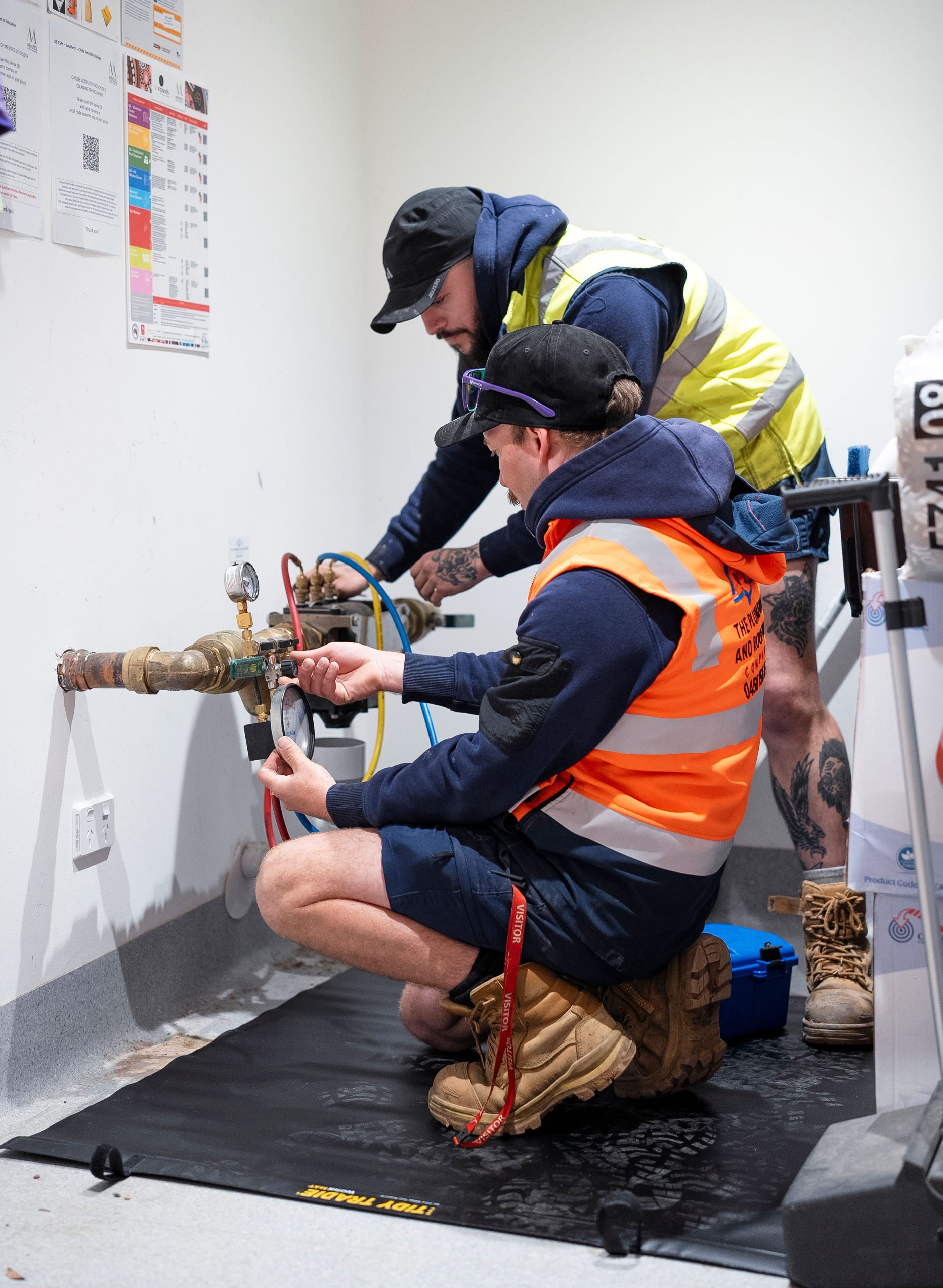
Commercial plumbing rarely gets attention until something goes wrong. Commercial plumbing is truly critical, as highlighted by situations such as a café kitchen mid-rush, an office restroom during peak hours, or a retail store dealing with unexpected leaks.
That middle ground between proactive maintenance and reactive repairs is where most businesses lose money. Commercial plumbing stability depends on catching those subtle signs of slow leaks or hissing valves before they become full-blown emergencies that disrupt your entire workday.
A small leak can quietly drain profits. A clogged kitchen sink can halt a café’s operations. And a faulty hot water system? That’s the kind of inconvenience that customers remember, and not in a good way. The reality is simple: ignoring early signs leads to bigger, costlier headaches.
This guide presents practical, straightforward solutions. From spotting early warning signs to understanding when professional help is needed, everything covered here is designed to keep commercial plumbing systems running smoothly.
Early warning signs in busy plumbing systems
There’s always a moment where a system tries to signal something’s off. In commercial plumbing, those signals tend to get ignored because everything still works. Water still flows, and drains still drain just slower, louder, or slightly off. That subtle delay in drainage or faint knocking in pipes usually gets brushed aside until it becomes disruptive.
One of the more common early signs of commercial plumbing issues is inconsistent pressure. Not a full drop, just fluctuations. A tap that runs strong one minute and weak the next often points to a buildup inside pipes or small leaks forming behind walls.
Then there’s sound. Gurgling drains, vibrating pipes, or that odd whistle when fixtures run. These noises rarely show up in neat diagnostic guides, yet they’re some of the most reliable indicators that something deeper is off within your commercial plumbing system.
Why small leaks become expensive failures fast
A slow leak doesn’t feel like a crisis. It’s easy to place a bucket, tighten a fitting, or simply monitor it. But in commercial plumbing, even a minor leak behaves differently because of scale and usage frequency. What drips quietly overnight can turn into structural damage over weeks.
Water doesn’t just disappear; it travels. It seeps into flooring, creeps behind walls, and weakens materials that weren’t designed to handle prolonged moisture. By the time visible damage appears, the repair often involves more than pipes. Flooring, cabinetry, and even electrical systems can get pulled into the fix.
There’s also the cost illusion. Many operators assume delaying repairs saves money. In practice, it does the opposite. A small repair might cost a few hundred dollars early on, but once damage spreads, the same issue can climb into thousands. The frustrating part is that it rarely feels urgent until it already is.
Commercial Plumbing Systems vs Residential Systems
|
Feature |
Commercial Plumbing |
Residential Plumbing |
|
Usage Level |
High | Moderate |
| System Complexity | Advanced |
Basic |
|
Maintenance Frequency |
Frequent | Occasional |
| Risk Factor | High (business impact) |
Lower |
|
Equipment Scale |
Large |
Small |
Common blockages in commercial plumbing systems
Blockages in commercial plumbing don’t behave like the occasional home clog. They build from repetition daily habits that seem harmless on their own. Grease going down a sink, paper towels flushed in a hurry, or food scraps rinsed during peak hours all accumulate over time.
Kitchen environments are particularly unforgiving. A kitchen sink clogged situation doesn’t just slow operations; it disrupts workflow entirely. Staff start working around the issue, using alternative sinks or delaying cleaning, which creates a chain reaction of inefficiency. It’s rarely just one blockage; it’s a system struggling under consistent misuse.
What’s often overlooked is how partial blockages affect the rest of the commercial plumbing system. Water backs up in places it shouldn’t, pressure shifts unpredictably, and other drains start behaving oddly. By the time a full blockage occurs, the system has already been compensating for weeks, sometimes months.
Mistakes made during plumbing renovation projects
Plumbing renovations sound like a reset button. New pipes, updated fixtures, improved layout,s it all suggests a fresh start. But in commercial plumbing, renovations often introduce new problems instead of solving old ones, mostly due to rushed decisions or poor planning.
One huge mistake is misjudging how much a system actually gets used. People upgrade for today’s needs and forget about tomorrow’s growth. Six months down the track, that new setup is already hitting its limit.
Then you’ve got the layout. Everything looks perfect on a blueprint, but in the real world, being off by just a fraction on a pipe’s slope can cause endless drainage headaches. These aren’t usually building-flooding type disasters, but they create constant little problems that annoy the staff and slowly bleed money through extra maintenance.
Gas fitting services and hidden risk factors
Gas systems don’t get the same casual treatment as water lines, and for good reason. In commercial plumbing, faults tied to gas fitting services carry higher stakes. Yet, smaller warning signs still get overlooked, like irregular flame color or subtle gas odors that come and go.
Gas problems are notoriously sneaky because they aren’t consistent. A system might purr along fine until you really push it during a rush, and that’s when the faults show up. Because these glitches are hard to trigger during a standard inspection, they often get ignored. That doesn’t make them safe; it just makes them a ticking clock.
A lot of people just lump gas work in with general plumbing, forgetting that it needs a much more specialized touch. Not every plumber treats a gas line with the specific caution or deep expertise it demands. That lack of focus can result in a system that works, but it’s likely running below par or, worse, skipping over safety margins.
Modern Trends Shaping Commercial Plumbing Today
The plumbing industry continues to evolve, especially in commercial spaces.
Trending Solutions:
- Smart leak detection systems
- Water-efficient fixtures
- Eco-friendly pipe materials
- Advanced electric hot water heater installation systems
- Digital monitoring tools
These innovations reduce costs and improve system efficiency.
Choosing a local emergency plumber wisely
Calling a local emergency plumber usually happens under pressure, with water everywhere, operations halted, and stress levels high. Decisions made in that moment aren’t always the best ones. Speed matters, but so does experience with commercial plumbing specifically.
Not all emergency plumbers are built the same. Some spend all their time on houses and try to use those same tactics on big commercial rigs, but it just doesn’t work. Commercial systems are a different beast when it comes to scale, rules, and how fast things need to move. A quick fix that works for a kitchen sink at home will probably fall apart in a busy restaurant.
Then there’s the issue of actually finishing the job. An emergency call-out usually just stabilizes the chaos, but doesn’t always kill the root cause. If you don’t follow up, you’re just waiting for the same pipe to burst again. It’s a cycle we see all the time: a temporary sigh of relief followed by another expensive breakdown.
Hot water system issues and upgrade decisions
Hot water never quits at a good time. In a business, it usually dies right in the middle of a rush when the system is under the most stress. If the water suddenly goes lukewarm or won’t stay steady, you’re usually looking at a much bigger problem than just a faulty heater.
Old tanks get filled with gunk and sediment, which eventually chokes their efficiency. Swapping over to an electric hot water heater installation can definitely boost reliability, but it’s not a magic fix for your bills. Electric units have different power needs, and depending on your setup, you might just be moving your costs around rather than actually lowering them.
People also get stuck on sizing. They just replace what they had with the exact same model without checking if their needs have changed. You end up with a brand-new system that still can’t handle a busy Friday night. A real upgrade looks at how you actually use water, not just the numbers on the box.
Preventive maintenance vs reactive repair costs
Preventive maintenance sounds great on paper, but it usually gets pushed aside for “if it isn’t broken, don’t fix it.” In a commercial setting, that mindset is a money pit. Since a scheduled check-up never feels like an emergency, it keeps getting bumped down the to-do list until something actually explodes.
Waiting for something to break means you’re dealing with a crisis. These repairs are urgent, costly, and often occur at the most inconvenient times, which is why utilizing Plumbing Audit and Inspection Checklists is essential. The real sting isn’t just the plumber’s bill; it’s the fact that your business has to stop running while the work gets done.
To be fair, maintaining a business isn’t always enjoyable. It takes constant effort and upfront cash without an immediate reward. That’s why people hesitate. The trick is realizing that neglecting the small stuff just turns predictable, manageable costs into chaotic, expensive nightmares.
Conclusion
Big plumbing disasters almost never happen out of nowhere; they start as tiny warnings that get ignored until they turn into massive bills. Staying on top of inspections and jumping on repairs quickly is the only way a business can stay efficient, keep the inspectors happy, and avoid those dreaded “closed for repairs” signs.
Ignoring early symptoms often leads to major breakdowns and higher repair costs. A proactive approach safeguards operations and long-term performance. If you want reliable results and peace of mind, contact us today to keep your commercial plumbing system working without interruptions.
Frequently Asked Questions
1. What causes frequent issues in commercial plumbing systems?
Frequent problems in commercial plumbing usually come from heavy usage, lack of maintenance, and aging infrastructure. Small issues like minor leaks or slow drains often go unnoticed until they develop into larger faults that disrupt daily operations and increase repair costs.
2. How often should commercial plumbing systems be inspected?
Commercial plumbing systems should ideally be inspected every six to twelve months. High-usage environments like restaurants may require more frequent checks to prevent blockages, leaks, and system failures that can interrupt business activities.
3. Is a clogged kitchen sink issue always serious?
A simple kitchen sink clogging problem might seem minor, but in a commercial kitchen, it’s a disaster waiting to happen. Grease and food scraps build up fast, creating deep blocks that can shut down your drains and turn into a major health hazard if you don’t get them cleared out immediately.
4. When should plumbing renovations be considered?
You know it’s time for plumbing renovations when you’ve got the plumber on speed dial. If your system is ancient or your bills are soaring, an overhaul is usually the smarter play. Older buildings especially need these upgrades just to get the water flowing right and to keep everything up to code.
5. Why are professional gas fitting services essential?
Professional gas fitting services are non-negotiable for keeping things safe. Messing around with gas is a recipe for leaks, fire hazards, and massive legal headaches. You absolutely need a licensed pro to make sure everything is compliant and, more importantly, safe for everyone in the building.


